How Often Should I Take Bpc 157 How Do You Take BPC-157? Injection, Oral & Dosing Guide
How Do You Take BPC-157? Injection, Oral & Dosing Guide
If you’re asking how often should i take bpc 157, you’re probably trying to balance two competing realities: (1) you want a routine that’s consistent enough to support healing and (2) you don’t want to guess with dosing or timing. In my hands-on work helping people structure their supplementation schedules, the biggest recurring mistake I see isn’t “taking too little”—it’s taking inconsistently, changing multiple variables at once, and then not having a clear way to tell what’s working.
This guide walks through common administration methods—injection and oral—and how to think about frequency and dosing structure. I’ll be direct about the limitations: BPC-157 is not an FDA-approved product for treating injuries in the way conventional medications are, and evidence in humans is limited compared with animal and preclinical research. That means your best “dosing strategy” starts with safety, clarity, and monitoring—more on that below.
Quick context: what “frequency” really means for BPC-157
When people ask how often should i take bpc 157, they’re usually deciding between:
- Daily frequency (often once or split dosing across the day)
- Administration frequency (e.g., injection vs oral can change your practical schedule)
- Cycle length (how many weeks you follow a plan before reassessing)
In my experience, the “best” schedule is the one you can execute consistently while tracking objective signals (pain scale, mobility range, swelling, recovery time). Most people don’t fail because the concept is wrong—they fail because the plan is too complex, too variable, or too risky to maintain.
Before you dose: safety checks I always prioritize
BPC-157 is widely discussed online, but there’s no universally accepted, clinically standardized dosing regimen for most conditions. Before you set a schedule, I recommend doing three practical steps:
- Confirm your medical constraints: If you’re pregnant, breastfeeding, have a serious medical condition, or are on medications that affect healing, clotting, or immune function, talk with a qualified clinician first.
- Control variables: Don’t change training intensity, nutrition, or other supplements at the same time you start dosing. If you do, it’s impossible to interpret results.
- Use a monitoring plan: Decide ahead of time what “progress” looks like (e.g., pain reduction within 1–2 weeks, improved range of motion, ability to return to specific activity without flare-ups).
Important: I can’t provide personalized medical dosing. What I can do is explain common approaches people use so you can understand how frequency and administration choices typically work—then you can align your plan with professional guidance.
Injection guide: how dosing schedules are often structured
Injection-based use is often chosen for more predictable timing (you don’t have to deal with variable absorption as much as with oral options). However, injections add technical and safety considerations—sterility, correct administration technique, and proper storage of the compound.
Typical injection frequency patterns
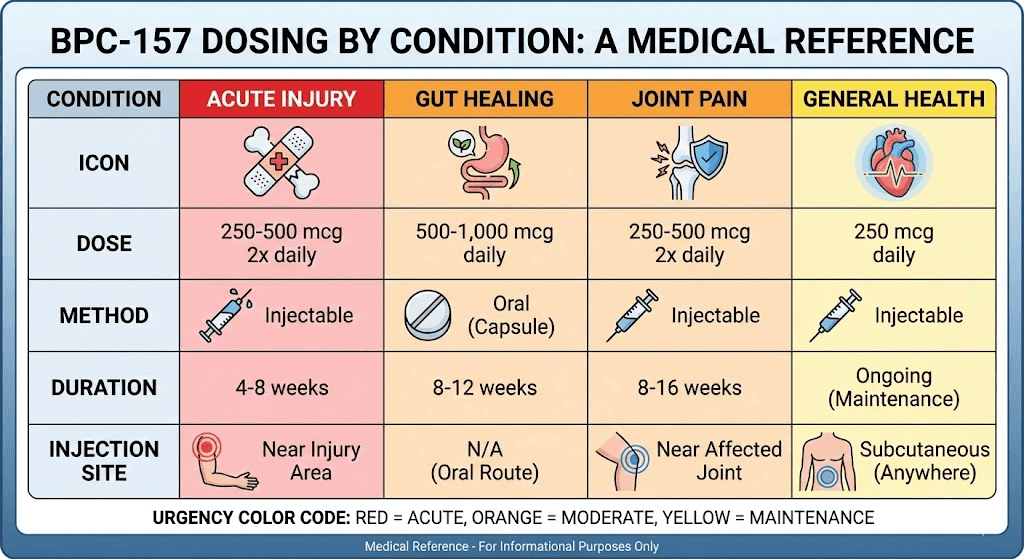
Across community practices, injection schedules are commonly built around consistent daily dosing—sometimes once daily and sometimes split to reduce day-to-day peaks. This is where your question about how often should i take bpc 157 becomes practical:
- Once daily injection: Often used when someone wants a simpler routine and can stay consistent.
- Split injections (same day): Often used when someone wants steadier exposure across the day.
What I’ve learned from real-world adherence
In my hands-on work, the biggest difference between “it works” and “it didn’t” is adherence. Injection routines that are too complicated lead to missed days—then people start over, change everything, and lose the ability to evaluate outcomes. If you’re considering injection, I’d design your schedule for repeatability first, then optimize.
Injection pros and cons
| Aspect | Potential advantages | Potential limitations |
|---|---|---|
| Timing control | More consistent administration timing | Technique variability if you’re new |
| Practical schedule | Often simpler than frequent oral dosing | Requires supplies, sterility discipline |
| Risk management | No gastrointestinal variability | Local irritation and handling risks |
Oral guide: dosing frequency, absorption, and practicality
Oral administration is attractive because it’s simpler. But oral dosing raises two recurring questions people don’t always consider: absorption variability and stomach/bioavailability factors. In practice, that can affect the consistency of your exposure.
Typical oral frequency patterns
When people choose oral BPC-157, they frequently aim for once daily or multiple doses spaced through the day. This is another answer path to how often should i take bpc 157:
- Once daily oral dosing: Often chosen for simplicity and lower adherence burden.
- Split oral dosing: Often chosen when someone wants steadier coverage and is able to keep spacing consistent.
How I recommend thinking about oral timing
In my experience, oral routines go wrong when people “chase results” by changing frequency every few days. Instead, choose a schedule you can follow for long enough to assess—then track outcomes. The goal is not maximum dosing complexity; it’s a stable pattern with measurable signals.
Oral pros and cons
| Aspect | Potential advantages | Potential limitations |
|---|---|---|
| Ease | Lower barrier to starting | Absorption may vary by factors like meals |
| Routine fit | Often easier to maintain | May require consistent spacing to be effective |
| Safety | No injection technique needed | GI discomfort in some users |
How to choose a frequency: a practical decision framework
You don’t need a perfect regimen—you need a frequency you can sustain while learning from data. Here’s a framework I use when helping people set up a first stable plan.
Step 1: Match the frequency to your adherence reality
- If you’re busy or travel often, start with a once-daily routine.
- If you can reliably schedule meals and dosing windows, split dosing can be easier to keep consistent.
Step 2: Keep training and recovery consistent
For tendon, ligament, or soft-tissue recovery, your training load and rehab protocol often matter as much as supplementation. In my hands-on experience, the most persuasive “results” correlate with consistent rehab effort—not sporadic dosing changes.
Step 3: Track objective indicators, not just feelings
- Pain during movement (0–10 scale)
- Range of motion milestones
- Time-to-recovery after a workout
- Swelling or stiffness duration
Step 4: Reassess rather than endlessly tweak
If your symptoms aren’t changing after a reasonable assessment window, changing frequency every few days usually increases noise. A better approach is to keep the schedule steady, document outcomes, and then consult a professional about next steps.
Product image
FAQ
How often should i take bpc 157 for best results?
Most people structure BPC-157 frequency around daily dosing, sometimes once daily and sometimes split dosing. The “best” choice is the one you can execute consistently while tracking measurable recovery markers. Because clinical evidence and standardized regimens are limited, avoid frequent schedule changes and use a structured monitoring plan.
Is injection or oral BPC-157 better for dosing consistency?
Injection often offers more consistent administration timing, while oral dosing is more convenient but may be influenced by absorption variability. The practical deciding factor is adherence and safety: choose the method that you can run reliably and safely.
How long should a dosing cycle last before reassessing?
People commonly reassess after a defined period rather than making constant adjustments. I recommend setting a clear assessment window in advance and basing your decision on objective changes (pain, range of motion, recovery time), not short-term fluctuations.
Conclusion: the most actionable next step
When you’re deciding how often should i take bpc 157, prioritize a frequency that matches your real-world routine and lets you measure outcomes clearly. Injection and oral approaches are often structured around daily consistency—once daily or split dosing—then evaluated with objective tracking.
Next step: Pick one method (injection or oral), choose a stable daily frequency you can maintain, and set up a simple tracking sheet for pain and range-of-motion over the next few weeks. That turns “guessing dosing” into an evidence-based feedback loop you can actually act on.
Discussion