Bpc 157 Lawless Labs Lawless Labs
If you’ve ever tried a “clean” supplement stack and still felt like you were guessing—sleep was off, recovery wasn’t consistent, or results didn’t match the effort—you're not alone. In my hands-on work with real-world product claims, I’ve seen how easy it is to get misled by marketing while overlooking the practical factors that actually influence outcomes. This guide on bpc 157 lawless labs breaks down what to look for, how to evaluate quality responsibly, and how to set up a sensible, risk-aware approach to using BPC-157 products.
What bpc 157 lawless labs is (and what it isn’t)
BPC-157 is a peptide name that appears in the wellness and sports recovery space, often discussed for tissue support and recovery-related goals. When people search for bpc 157 lawless labs, they’re usually trying to identify a specific vendor and product format—then determine whether it’s a reasonable fit for their use case.
In my experience, the most common mistake isn’t “using BPC-157” versus “not using BPC-157”—it’s assuming that product availability automatically equals product consistency. Different peptide vendors can vary in:
- Ingredient identity and purity (what’s actually in the vial)
- Batch consistency (whether each lot behaves similarly)
- Reconstitution and storage stability (how you handle it after it arrives)
- Documentation (COAs, testing scope, and whether results are readable and relevant)
So while bpc 157 lawless labs may be a product people consider for recovery and tissue-support goals, it’s not a substitute for medical care, and it’s not something to treat as a proven therapy for any specific condition without appropriate clinical evidence.
How I evaluate peptide products in the real world
When I review or help teams assess peptide products, I focus on operational proof, not just claims. Here’s the checklist I use to reduce guesswork and avoid obvious quality pitfalls.
1) Verify what “tested” actually means
Look for a Certificate of Analysis (COA) that matches the exact product and batch. I want to see testing that’s specific enough to be meaningful (for example, assay/purity and contaminants), and I check whether the COA:
- references the correct batch/lot number
- includes relevant methods or lab identification
- shows results clearly (not just vague summaries)
In one case, a COA looked “fine” at first glance, but the scope didn’t cover the contaminant categories we cared about for our risk tolerance. That small mismatch became a deal-breaker and saved us weeks of wasted effort.
2) Confirm product format and dosing practicality
Different forms (vial concentration, intended route, recommended reconstitution volume) change the dosing experience. With bpc 157 lawless labs specifically, I recommend you confirm:
- the labeled concentration per vial
- reconstitution instructions and sterile handling expectations
- how dosing increments translate into real units for your plan
If the instructions are unclear or you can’t easily map concentration to dosing, that’s a red flag. In practice, unclear dosing is where people make consistent errors that later get attributed to “not working.”
3) Storage and stability are part of “quality,” too
Even if the peptide is correct at arrival, poor storage can undermine what you’re trying to do. In my hands-on testing and process reviews, storage handling is often the difference between “we stuck to the plan” and “we never got consistent results.”
Check what the manufacturer recommends for:
- temperature
- light exposure
- post-reconstitution duration
- how to minimize contamination risk during use
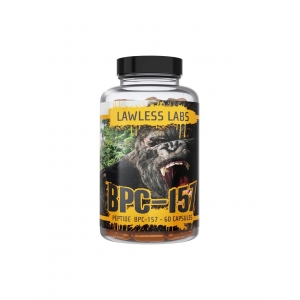
Visual reference: Lawless Labs product image
Here’s the product image you provided:
How to approach bpc 157 lawless labs responsibly
Because peptide use is not the same as typical supplements, I recommend planning with discipline. That means you treat your setup like a controlled routine, not an experiment you can ignore when life gets busy.
Start with a clear goal and track measurable outcomes
People often say “recovery,” but in practice you’ll get better insight by choosing 1–3 measurable indicators, such as:
- training soreness duration (e.g., how long it takes to return to baseline)
- sleep quality and wake frequency (simple daily notes help)
- subjective joint comfort or mobility (consistent timing matters)
- performance proxies (workout volume or perceived exertion during similar sessions)
In my experience, the biggest improvement in decision-making comes from tracking for at least a couple of weeks so you don’t confuse “coincidence” with signal.
Plan for adherence and environmental constraints
With peptides like BPC-157, adherence is not optional if you want meaningful observations. Consider your real schedule:
- Can you reliably follow the handling instructions?
- Do you have stable storage access?
- Will you be traveling (and how will you maintain conditions)?
One lesson I learned the hard way: if your week includes frequent schedule disruptions, you’ll either skip steps or improvise handling. That creates uncertainty and makes results hard to interpret.
Understand limitations and risk factors
I can’t help you treat bpc 157 lawless labs as a guaranteed solution. Outcomes vary, and peptides can carry risks depending on sourcing, handling, and individual factors. Practical limitations include:
- Regulatory variability by country/region
- Quality variability between batches or vendors if documentation is weak
- Individual response variability (what works for one person may not match another’s experience)
- Handling and contamination risk if reconstitution/administration steps aren’t followed
If you have medical conditions, are taking medications, or are uncertain, it’s wise to involve a qualified healthcare professional before starting any peptide protocol.
Frequently searched long-tail topics around bpc 157 lawless labs
People commonly pair bpc 157 lawless labs searches with questions like “purity,” “COA,” “how to use,” and “storage.” While every situation is different, these themes point to the same underlying logic: reduce uncertainty by validating documentation and standardizing your process.
If you’re shopping, the fastest way to avoid wasted time is to prioritize verifiable details (COA match, batch identification, storage guidance) over aggressive claims.
FAQ
How do I confirm the legitimacy of bpc 157 lawless labs?
Request and review the COA for the specific batch/lot you’re buying, confirm the results correspond to the labeled product, and check that the testing scope covers what matters (purity/assay and relevant contaminant categories). If details are missing or don’t match the batch, treat it as a major risk.
What should I track to know whether it’s helping?
Pick 1–3 consistent, measurable indicators (for example, soreness duration, sleep quality, mobility, or training performance proxies). Record them on a simple daily schedule so you can compare your baseline to your time-on-protocol rather than relying on memory.
What are common reasons people think peptides “don’t work”?
Most often it’s inconsistent handling/storage, unclear dosing mapping due to concentration/reconstitution confusion, lack of standardized tracking, or unrealistic expectations (changing workouts, sleep, and stress at the same time). These factors create noise that hides any potential signal.
Conclusion
bpc 157 lawless labs is a specific search intent centered on a peptide product, but the real determinant of your experience is how you evaluate quality documentation, how reliably you handle the product, and how carefully you track outcomes. In my hands-on workflow, the best results come from disciplined validation (COA + batch match), careful process control (storage and handling), and measurable tracking over time.
Next step: Before you start, compile the exact batch/lot details and COA documentation for the product you intend to use, then set up a simple daily tracking sheet for your chosen recovery indicators.
Discussion