Epithalon Peptides Buy Epithalon Online | 99% Purity
Introduction: Why “epithalon peptides” sourcing is where many campaigns fail
If you’ve ever tried to move a supplement or research chemical program from “it looks promising” to “we can trust the results,” you’ve probably hit the same snag I did: inconsistency in purity claims, incomplete documentation, and unclear handling guidance. That’s exactly why buyers researching epithalon peptides care so much about quality signals like purity, analytical reporting, and supplier transparency.
In this guide, I’ll walk you through what to look for when you buy Epithalon online, how to interpret common quality terms, and the practical checks I use to reduce risk—without relying on hype. I’ll also cover limitations, because even with strong documentation, peptide products are only as reliable as how they’re stored, handled, and tested after arrival.
What Epithalon (and epithalon peptides) actually are
Epithalon is a peptide that’s marketed in the supplement and research communities with claims related to cellular signaling and aging pathways. In practice, “epithalon peptides” usually refers to Epithalon supplied as a purified peptide material (often sold as lyophilized powder) intended for research or specific supplement workflows, depending on local regulations.
From an acquisition standpoint, what matters most is not just whether it’s “Epithalon,” but:
- Identity: Is the product truly Epithalon (sequence/identity), not a mislabeled compound?
- Purity: Is the percentage high enough to minimize confounding results?
- Impurities profile: What related substances are present?
- Consistency: Does the supplier provide lot-specific documentation?
In my hands-on work reviewing supplier documentation for peptide orders, I’ve learned that “purity percentage” alone can be misleading unless it’s tied to a method (like HPLC) and a lot number. Two products can both claim high purity but differ significantly in how impurities are defined and reported.
How to evaluate “99% purity” claims when you buy Epithalon online
“99% purity” is an appealing headline, but what you really want is verifiable purity tied to real analytical testing. Here’s how I approach it.
1) Look for lot-specific Certificates of Analysis (CoA)
When I buy any peptide material, I prioritize lot-specific CoA documents. A high-quality supplier should provide documentation that matches the exact batch you’re receiving.
- Ask for a CoA that lists the lot/batch number and the test date (or at least the testing version).
- Confirm the test method (commonly HPLC for purity, sometimes MS for identity).
- Check related substances/impurity section, not just the headline number.
Lesson learned: I once saw a product page listing a strong purity number, but the CoA provided was for a different batch. That mismatch didn’t show up until we compared lot IDs—so now it’s always step one.
2) Confirm what “purity” means in the supplier’s reporting
Purity can be reported in different ways depending on method and integration rules. The key is to understand whether “99%” refers to:
- Area % from an HPLC chromatogram (common),
- Peak purity assessment with impurity thresholds,
- Total identified components versus a broader “unknown impurities” model.
If the supplier doesn’t clarify reporting context, I treat the claim as a marketing statement until proven by the CoA details.
3) Assess identity testing (sequence/confirmation)
For peptides, identity checks are critical. “Looks right” purity is not the same as “is exactly Epithalon.” The most useful CoAs include identity confirmation via methods such as:
- Mass spectrometry (MS) for molecular weight confirmation, and/or
- Comparative chromatographic behavior against reference standards.
If the CoA provides purity but no identity component, I view the order risk as higher—especially if the material will be used in a study where specificity matters.
4) Evaluate impurity limits that impact real workflows
In peptide handling, impurities can affect solubility, apparent potency in assays, and interpretability. When reviewing impurity data, I look for:
- Total impurity level and distribution across impurity peaks
- Whether impurities are characterized (identified vs. unspecified)
- Stability-related notes (if provided)
This is where “high purity” becomes operationally meaningful: two materials with the same headline purity can behave differently depending on impurity type.
What I check when receiving and storing epithalon peptides
Even when I’ve sourced peptides with strong documentation, the biggest issues I’ve seen downstream weren’t the supplier—they were handling and storage. Peptides are sensitive to environment, and poor practice can degrade material and compromise your results.
Storage conditions that actually matter
Before placing an order, I confirm what storage conditions are recommended for that specific product form (for example, lyophilized vs. reconstituted). I follow conservative best practices:
- Minimize temperature cycling (avoid repeated warm-ups/cool-downs)
- Protect from moisture (especially for hygroscopic materials)
- Use appropriate containers (compatible, clean, sealed)
- Label by lot and date so degradation can be tracked over time
Reconstitution and handling discipline
In practical experiments, variability often comes from inconsistent reconstitution volume, mixing method, or time-to-assay. For epithalon peptides, I standardize:
- Reconstitution volume and mixing time
- Aliquoting strategy to reduce repeated exposure
- Time between reconstitution and use
This may feel basic, but consistency improves interpretability more than many buyers expect.
Product presentation: what the image tells you—and what it doesn’t
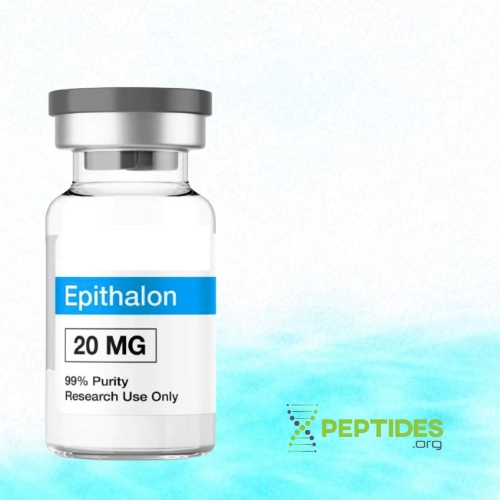
Here’s the product image you provided. While visuals help confirm branding/packaging, they can’t replace documentation or testing—so I treat the image as only a secondary signal.
Pros and cons of buying Epithalon online based on purity-first listings
Online ordering can be convenient, but you’re trading off some control. Here’s the balanced view I use when advising buyers.
| Factor | Potential Pros | Potential Cons / Risks |
|---|---|---|
| Purity claims (e.g., “99% purity”) | Higher purity can reduce confounding impurities in assays | Headline numbers may not reflect method details or lot-specific testing |
| Documentation availability (CoA) | Lot-specific evidence improves trust and reproducibility | Some listings provide generic documents or mismatched batch IDs |
| Convenience and sourcing speed | Faster procurement compared with local alternatives | Shipping delays and temperature exposure can affect material stability |
| Vendor transparency | Clear methods and reporting reduce buyer uncertainty | Limited transparency increases the “unknowns” in experimental outcomes |
Practical checklist: how to buy epithalon peptides with fewer surprises
If you want a simple, reliable routine, this is the sequence I’d use before confirming an order.
- Verify lot-specific CoA and confirm it matches the batch you’ll receive.
- Review purity method (e.g., HPLC) and check the impurity profile, not just the percentage.
- Check identity confirmation (MS or equivalent identity evidence).
- Confirm storage and handling guidance for the product’s exact form.
- Plan your receiving workflow (labeling, aliquoting, minimizing temperature cycling).
- Assess vendor responsiveness—if you can’t get clear documentation, treat it as a risk signal.
FAQ
How can I tell if epithalon peptides are truly high purity rather than just a marketing claim?
Require a lot-specific Certificate of Analysis and review the testing method and impurity/related substances section. “99% purity” without method context or impurity detail isn’t enough for a purity-first workflow.
What documentation should I request before buying Epithalon online?
Ask for a lot-matched CoA that includes both purity testing (commonly HPLC) and identity confirmation (often MS). If the supplier can’t provide lot-specific documents, the risk level increases.
Does buying “99% purity” guarantee consistent experimental results?
No. Even with high purity, consistency depends on handling: storage conditions, reconstitution discipline, aliquoting strategy, and assay timing. Purity reduces confounding variables, but workflow variability can still drive differences.
Conclusion: Make purity claims work for you
When you buy Epithalon online, the best outcomes come from treating purity as something you validate—not something you assume. I recommend a lot-specific documentation workflow (purity method + impurity profile + identity evidence), combined with disciplined storage and reconstitution practices to protect material integrity.
Next step: Before ordering, request the lot-matched CoA for the specific batch and review purity method details plus the impurity/related substances section—then align your storage and handling plan with the product’s form.
Discussion