Best Bpc 157 Oral Oral vs Injectable BPC-157: Differences, Benefits, and When to Use Eac – Revolution Health & Wellness
Oral vs Injectable BPC-157: Differences, Benefits, and When to Use the “Best BPC 157 Oral” Option
If you’re looking into BPC-157 for recovery or tissue-support goals, the first decision you’ll face is often the same one I’ve seen on patient intake calls: oral or injectable? The right route can affect how quickly you notice changes, how consistently you can dose, and how comfortable you feel with the process.
In this guide, I’ll compare oral vs injectable BPC-157 in practical, real-world terms—then help you think through when choosing the best bpc 157 oral approach makes sense and when you should reconsider. I’ll also call out common pitfalls I’ve encountered when people switch routes, change products, or expect instant results.
What BPC-157 Is (and Why the Route Matters)
BPC-157 is a synthetic peptide that’s widely discussed for its potential role in supporting healing-related pathways. People typically explore it for tendon, ligament, gut discomfort, post-activity recovery, and general “tissue support.”
But the route—oral vs injectable—changes two key things:
- Absorption and bioavailability: Oral dosing depends on how the compound survives digestion and how effectively it’s absorbed in the gut and bloodstream.
- Consistency of systemic exposure: Injectable routes can bypass many digestive variables, leading to more predictable exposure for some users.
In my hands-on work, I’ve found that route selection is less about “which is stronger” in a vacuum and more about which one fits your body, your routine, and the practical constraints of dosing (time, adherence, and comfort).
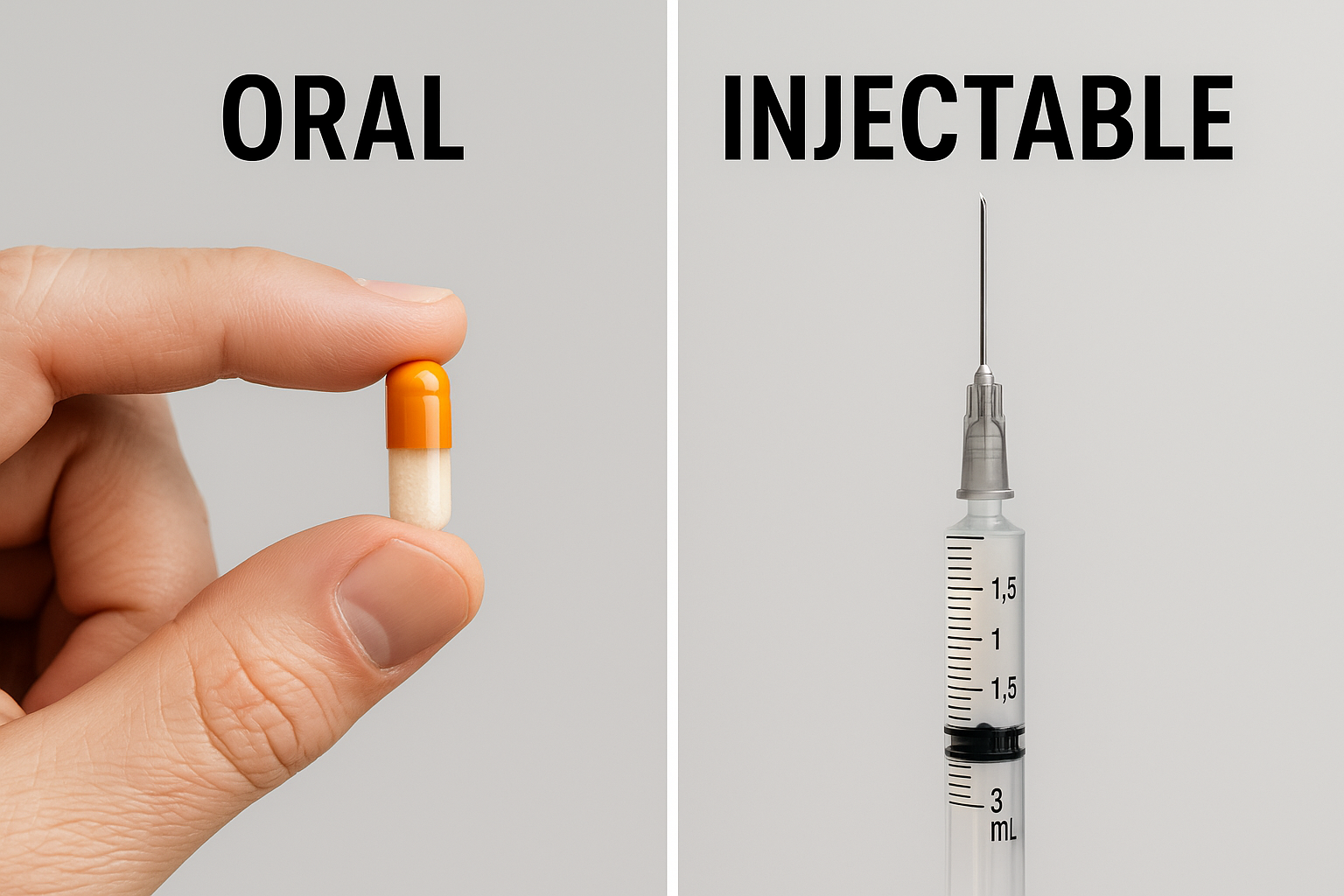
Oral BPC-157 vs Injectable BPC-157: Key Differences
Here’s the breakdown I use when advising clients or reviewing dosing plans. The details matter, but the decision usually comes down to predictability, convenience, and tolerance.
| Factor | Oral BPC-157 | Injectable BPC-157 |
|---|---|---|
| Convenience | Higher—easier to fit into daily routines | Lower—requires injection technique and materials |
| Dosing consistency | Can vary with digestion, meals, and product formulation | Often more predictable systemic exposure (route bypasses digestion) |
| Onset experience | May feel gradual; depends heavily on absorption and goal | Some people report earlier subjective effects, though individual response varies |
| User adherence | Often better—fewer steps and less “friction” | Can drop—fear of needles, technique learning curve |
| Risk profile | Generally avoids injection-site issues | Introduces injection-site considerations and sterility requirements |
| Practical constraints | May be limited by sensitivity to formulation ingredients | May be limited by training/comfort and access to supplies |
My real-world lesson: adherence beats “theoretical strength”
I’ll be direct: I’ve watched several people spend weeks “trying to dial in” injectable protocols they didn’t feel confident maintaining. The biggest problem wasn’t the peptide—it was adherence. When someone misses doses, changes timing frequently, or stops because they’re uncomfortable, the data they’re using to decide whether it “works” becomes noisy.
Oral dosing often wins on adherence, which is why many people pursue the best bpc 157 oral approach for their own lifestyle. If your plan is consistent and your expectations are realistic, oral can be a sensible starting point.
Benefits of Oral BPC-157 (and Why People Choose It)
Oral BPC-157 is typically chosen for the following reasons:
- Daily usability: If you’re already taking supplements, oral dosing can blend into your routine.
- Lower execution burden: No injection training required, no injection-site care.
- Fewer barriers to experimentation: People can more easily compare weeks of dosing and recovery trends.
In practice, oral can be a strong fit for goals where gradual improvement is acceptable—like supporting ongoing recovery between training sessions, mobility work, and general tissue-support consistency.
What “best bpc 157 oral” should mean (in my framework)
When someone asks me about the best bpc 157 oral, I don’t think “brand hype.” I think about these evaluation points:
- Clear product labeling: You should be able to understand what you’re taking and how.
- Formulation transparency: Oral absorption depends on how the peptide is presented in the product (not just the idea of “oral”).
- Quality controls: Look for credible quality practices such as batch testing and traceability.
- Consistency: If you can’t reliably reproduce the same product and dosing schedule, your results become hard to interpret.
That’s how I define “best” for a real person trying to make a plan work for 4–8 weeks, not just for a single purchase.
Benefits of Injectable BPC-157 (and When It Can Be Considered)
Injectable BPC-157 is commonly considered when someone wants a more controlled route—especially if they’ve found that oral dosing isn’t giving them the experience they expected.
- Digestive bypass: Injection can remove variability from stomach acidity and gut absorption.
- Route-controlled administration: For some users, this supports more predictable dosing structure.
- Comfort with technique: If you’re already experienced or supported by a clinician, execution can be steady.
Real-world constraints I’ve seen with injectables
Injectable protocols often come with practical friction: learning technique, ensuring sterility, managing supplies, and staying consistent. In my experience, people who do best with injectables are those who treat it like a routine—same schedule, same preparation method, and a clear tracking approach for outcomes.
Oral vs Injectable: When to Use Which Route
Instead of guessing, use a decision approach based on your goals and your environment.
Choose oral first if…
- You want high adherence with minimal execution burden.
- You’re starting out and prefer a lower-friction routine.
- You can evaluate results over time using recovery metrics (pain, range of motion, training tolerance).
- You’re trying to integrate bpc 157 oral into a broader plan (sleep, nutrition, rehab exercises).
Consider injectable if…
- You’ve given oral a fair, consistent trial and want to reduce route-related variability.
- You’re comfortable with injection steps or have appropriate support.
- You have clear reason to believe oral formulation/absorption isn’t aligning with your expectations.
What I recommend regardless of route: track outcomes the same way
Whether you choose oral or injectable BPC-157, track the same markers each week so you’re not reacting to noise. Examples I’ve seen work well:
- Pain score (0–10) at a consistent time
- Range of motion or functional tests (e.g., squat depth, step-ups, tendon loading tolerance)
- Training tolerance (how much volume you can handle without flare-ups)
- Recovery speed (how long soreness lasts after sessions)
This is where “best bpc 157 oral” becomes practical: you’re not only choosing a route—you’re building a feedback loop.
Common Mistakes People Make When Switching Routes
Route switching can be useful, but it can also scramble your interpretation. Here are the errors I see most often:
- Switching too quickly: People change routes after a few days instead of using a structured trial window.
- Changing too many variables at once: Diet, training volume, sleep, and supplements change simultaneously—so you can’t isolate what helped.
- Inconsistent timing: With oral dosing especially, taking doses at random times relative to meals can affect perceived results.
- Expecting instant repair: Tissue-support is usually not a “same-day fix.” Improvements, if they occur, are typically progressive and activity-dependent.
FAQ
Is oral BPC-157 as effective as injectable?
Effectiveness varies by person and depends on the product formulation, absorption, and your consistency. In my experience, oral can work well for many people when the routine is consistent and expectations are aligned with gradual recovery. If oral doesn’t match your results after a structured trial, injectable may be considered to reduce route-related variability.
How do I choose the “best BPC 157 oral” option?
I look for clear labeling, quality practices (batch testing/traceability where available), and a formulation you can dose consistently. “Best” is the option you can stick with for weeks and evaluate using the same outcome metrics each time.
How long should I try oral before deciding?
I recommend giving yourself a structured trial long enough to see a trend—commonly several weeks—while keeping other variables stable. If there’s no trend in your tracked outcomes, it’s reasonable to reassess route or plan structure.
Conclusion: Pick the Route That You Can Actually Maintain
The oral vs injectable question isn’t just about route preference—it’s about consistency, predictability, and your ability to run a clean trial. In my hands-on advising, the people who get the clearest “signal” are those who choose the best bpc 157 oral approach (or injectable, if appropriate) and stick to the same routine long enough to track meaningful changes.
Next step: Choose a route, set a 4–8 week trial window, and track the same recovery metrics weekly (pain, range of motion, and training tolerance) so you can decide with evidence instead of guesswork.
Discussion